
What Are Smart Ways to Save Money on Groceries

What Are Smart Ways to Save Money on Groceries? 25 Practical Tips
Grocery shopping can quietly consume a large part of your monthly budget. You may enter the store planning to buy only a few essentials, yet leave with an overflowing cart and a much higher bill than expected. Rising food prices make the problem more noticeable, but inflation alone doesn’t always drive expensive groceries. Impulse purchases, unused ingredients, poor meal planning, and confusing promotions can also increase your spending.
So, what are smart ways to save money on groceries without relying on unhealthy food or giving up the meals your family enjoys?
The most effective approach is to plan meals before shopping, check what you already have, compare unit prices, choose affordable alternatives, and reduce food waste at home. These habits may appear small individually, but together they can produce meaningful savings every month.
You do not need to become an extreme couponer or visit several stores every week. A simple, repeatable grocery system is usually more effective. This guide explains smart ways to save money on groceries, including practical strategies you can use before shopping, in the store, and at home.
Table of Contents
Quick Answer: What Are Smart Ways to Save Money on Groceries?
The smartest ways to reduce grocery spending are:
- Set a realistic weekly grocery budget.
- Plan meals around ingredients you already own.
- Check weekly sales before creating your shopping list.
- Compare prices by unit, not package size.
- Choose store brands when the quality is comparable.
- Buy bulk products only when you will use them.
- Replace some meat-based meals with affordable proteins.
- Use frozen produce when fresh produce is expensive.
- Freeze food before it spoils.
- Limit convenience foods and impulse purchases.
- Join free loyalty programs.
- Review your grocery receipt and spending every week.
These techniques work because they address the three biggest causes of overspending: buying unnecessary products, paying more than necessary and wasting food after bringing it home.
Why Is Grocery Shopping So Expensive?
Before exploring smart ways to save money on groceries, it helps to understand where the money goes.
A grocery bill includes more than the food served at breakfast, lunch, and dinner. Snacks, beverages, household cleaners, toiletries, paper products, pet supplies, and last-minute purchases may all appear on the same receipt. This makes it difficult to determine how much you actually spend on food.
Supermarkets also encourage shoppers to spend more through strategic displays. Popular products may be placed at eye level, while discounted alternatives are positioned on higher or lower shelves. End-cap displays create the impression of a special offer, even if the displayed product isn’t the best value.
Waste is another significant expense. According to the U.S. Environmental Protection Agency, one-third of food in the United States goes uneaten. The EPA also reports that an average family of four spends almost $3,000 annually on uneaten food. Planning, proper storage, and using leftovers can therefore save a considerable amount of money. U.S. EPA
The solution is not simply to search for the cheapest products. It is to make every item you purchase serve a clear purpose.

1. Establish a Realistic Grocery Budget
The first step in finding smart ways to save money on groceries is knowing how much you currently spend.
Review your grocery receipts or bank transactions from the previous four weeks. Separate food purchases from toiletries, cleaning products, alcohol, pet supplies, and other household expenses. Calculate the average amount spent on groceries each week.
Next, choose a realistic reduction. If you currently spend $200 per week, cutting the budget to $100 immediately may be hard to sustain. A more reasonable starting target might be $170 or $180.
Divide the weekly budget into categories such as:
- Fresh produce
- Meat and other proteins
- Dairy and eggs
- Pantry staples
- Frozen products
- Snacks and beverages
A budget should guide your decisions, not prevent you from buying nutritious food. Track your spending for several weeks and adjust each category based on your household’s actual needs.
2. Shop Your Pantry before Visiting the Store
When people ask for smart ways to save money on groceries, one of the simplest answers is to start at home.
Before preparing your shopping list, inspect your refrigerator, freezer, and pantry. Look for ingredients that need to be used soon and products you may have forgotten. You might discover enough pasta, rice, canned vegetables, frozen meat, or baking ingredients to prepare several meals.
The EPA specifically recommends checking food storage areas before shopping and planning upcoming meals around items that need to be used. This prevents duplicate purchases and reduces spoilage. U.S. EPA
Create a short “use first” list and place it where everyone can see it. This could include:
- Spinach that is beginning to wilt
- Yogurt approaching its date.
- Half an open jar of pasta sauce
- Cooked chicken from a previous meal
- Frozen vegetables that have been stored for several months
Designing meals around these ingredients turns potential waste into useful food.
3. Create a Flexible Weekly Meal Plan
Meal planning is central to understanding smart ways to save money on groceries.
You do not need to schedule an elaborate recipe for every night. Instead, choose five or six main meals and leave room for leftovers, social plans, or unexpected schedule changes.
A practical weekly plan could include:
- Monday: Chicken, rice, and vegetables
- Tuesday: Bean tacos with leftover vegetables
- Wednesday: Pasta with tomato sauce and salad
- Thursday: Leftover night
- Friday: Homemade pizza
- Saturday: Lentil soup with bread
- Sunday: Flexible meal or food already in the freezer
Select recipes that share ingredients. For example, you can use spinach in omelets, pasta, soup, and wraps. Roasted chicken can become sandwiches, tacos, or a casserole. This reduces the number of unique products you must purchase and makes it easier to finish everything.
The best meal plan is not the most creative one. It is the one your household will realistically follow.
4. Build a Shopping List Based on Meals
If you are researching smart ways to save money on groceries, never underestimate a detailed shopping list.
Write down only the ingredients required for your planned meals, regular breakfasts, lunches, snacks, and household essentials. Include quantities whenever possible. Instead of writing “apples,” write “six apples.” Instead of “chicken,” note “two pounds of chicken for two dinners.”
According to the EPA, adding quantities to a grocery list can help households avoid overbuying. It also recommends considering how many meals you’ll actually eat at home. U.S. EPA
Organize your list by store section:
- Produce
- Meat and seafood
- Dairy
- Pantry
- Frozen foods
- Household products
This makes shopping faster and reduces the chance of wandering through aisles where unnecessary purchases may catch your attention.
5. Plan Meals around Weekly Sales
Another practical way to save money on groceries is to reverse the traditional meal-planning process.
Instead of choosing recipes first and then buying expensive ingredients, review your store’s weekly advertisement before finalizing your meals. If chicken thighs, beans, broccoli, or pasta are discounted, build meals around those products.
However, a sale is useful only when:
- You regularly use the product.
- The discounted price is genuinely lower.
- You can consume or freeze it before it spoils.
- It fits within your existing grocery budget.
Avoid adding an unnecessary item merely because its label says “sale.” Spending $4 on something you didn’t intend to buy doesn’t save money, even if its regular price is $6.

6. Compare Unit Prices
Package sizes can make grocery price comparisons confusing. A larger box may appear more economical, but this is not always the case.
The unit price shows the cost per ounce, pound, liter, or individual item. It allows you to compare different package sizes and brands fairly.
For example:
- Product A: 12 ounces for $3.00 = $0.25 per ounce
- Product B: 20 ounces for $4.40 = $0.22 per ounce
Product B has the lower unit price, as long as you use the entire package.
Anyone learning smart ways to save money on groceries should make unit-price comparison a regular habit. Look for the small shelf label below the product or calculate the price by dividing the total cost by the quantity.
7. Try Store Brands
Store-brand products are often less expensive because their prices include fewer advertising and branding costs. For basic products, the quality difference may be small or unnoticeable.
Good products to test as store-brand alternatives include:
- Flour and sugar
- Rice and pasta
- Canned beans
- Frozen vegetables
- Oats and cereal
- Milk and butter
- Spices
- Cleaning supplies
- Paper products
You do not need to replace every favorite product. Compare ingredients, nutrition labels, package sizes, and taste. If your family strongly prefers a particular branded product, keep it and save money in other categories.
A gradual approach makes this method sustainable.
8. Buy in Bulk Selectively
Bulk buying often appears in advice on smart ways to save money on groceries, but larger quantities aren’t automatically cheaper.
Buying in bulk can help with shelf-stable products you use regularly, such as rice, oats, dried beans, canned foods, flour, and certain household supplies. It can also work for meat when you can divide and freeze it safely.
Avoid bulk purchases when:
- Your household rarely uses the product.
- The food has a short shelf life.
- You lack proper storage space.
- The unit price is not lower.
- Buying it would exceed your weekly budget.
- You tend to consume more simply because more is available.
The EPA notes that large packages and buy-one-get-one offers save money only when you use the food before it spoils. U.S. EPA
9. Use Affordable Protein Sources
Meat and seafood can represent a large portion of a grocery bill. You don’t have to remove them completely, but shifting your meals can reduce costs.
Affordable protein choices may include:
- Eggs
- Lentils
- Dried or canned beans
- Chickpeas
- Peanut butter
- Canned tuna
- Tofu
- Greek yogurt
- Chicken thighs
- Ground turkey
- Less expensive cuts of meat
Try introducing one or two meatless dinners each week. Bean tacos, lentil soup, chickpea curry, vegetable omelets, and black-bean chili can be satisfying without requiring expensive ingredients.
You can also use meat as part of a dish rather than its main component. A smaller amount of chicken can be combined with rice, beans, and vegetables to produce several servings.
10. Choose Seasonal Produce
Seasonal fruits and vegetables are often more abundant, fresher, and less expensive than produce transported over long distances.
Instead of deciding that you must purchase a specific fruit, compare current prices and choose the best-value option. If berries are expensive, apples, bananas, or oranges may be more affordable. If asparagus costs too much, consider cabbage, carrots, broccoli, or frozen green beans.
When looking for smart ways to save money on groceries, flexibility matters. Build your meal around the produce that offers the best combination of cost, nutrition, and usability that week.
11. Consider Frozen and Canned Produce
Fresh produce is not always the most economical choice. Frozen fruits and vegetables can be excellent alternatives because they last longer, require little prep, and let you use only what you need.
Useful frozen products include:
- Broccoli
- Peas
- Corn
- Mixed vegetables
- Spinach
- Berries
- Mango
- Cauliflower
Canned tomatoes, beans, corn, and fruit can also support inexpensive meals. Compare labels and choose options with less added sodium or sugar when possible.
Frozen and canned foods can break the cycle of buying large quantities of fresh produce and throwing some away a week later.
12. Calculate the Real Cost of Convenience
Pre-cut fruit, grated cheese, individual snack packages, prepared meals, and bottled beverages can save time, but shoppers usually pay for that convenience.
Compare the unit prices of:
- Whole fruit versus pre-cut fruit
- A block of cheese versus shredded cheese
- A large yogurt container versus individual cups
- Whole vegetables versus pre-chopped vegetables
- Dry rice versus microwave rice packets
- Reusable water bottles versus bottled water
Preparing basic ingredients at home often costs less. However, convenience items are not automatically wasteful spending. If a prepared vegetable makes you more likely to cook instead of ordering takeout, it may still provide good value.
The objective is to pay for convenience intentionally rather than automatically.
13. Avoid Shopping While Hungry
Hunger can make almost every product look appealing. It may lead to extra snacks, bakery items, prepared food, or meals that were not included in your plan.
Eat a meal or small snack before visiting the supermarket. Carry water and use your list as the main decision-making tool.
This may sound simple, but smart ways to save money on groceries often come down to controlling the conditions under which you make purchasing decisions. A shopper who is hungry, tired, rushed, or accompanied by bored children may find it harder to resist impulse purchases.
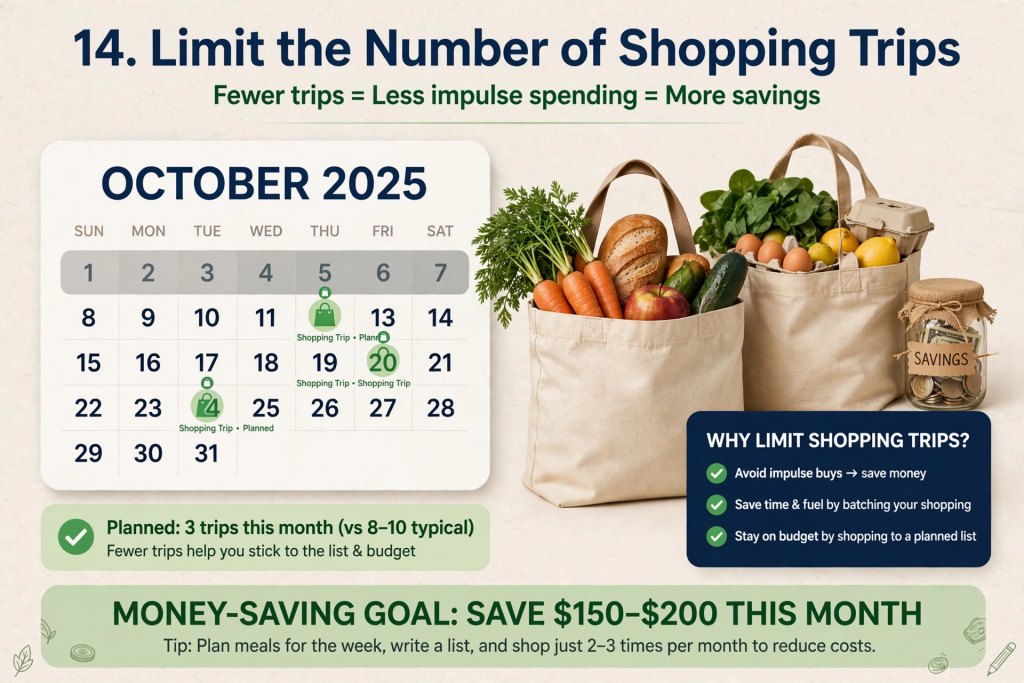
14. Limit the Number of Shopping Trips
Every supermarket visit creates another opportunity to spend more than planned. A quick trip for milk can easily become a $30 purchase.
Try shopping once a week and set aside a small portion of your budget for necessary midweek items. If you forget something minor, ask whether you can adapt the meal using an ingredient you already have at home.
Fewer trips can also reduce fuel expenses and save time. The goal is not perfect planning; it is reducing unnecessary exposure to purchasing opportunities.

15. Use Coupons Strategically
Coupons help when they reduce the cost of products you already intend to buy. They are less helpful when they persuade you to buy something unnecessary.
Before using a coupon, ask:
- Was this product already on my list?
- Is the final price lower than the store-brand alternative?
- Will I use the entire product?
- Does the promotion require buying more than I need?
- Can the coupon be combined with a genuine sale?
Digital coupons and loyalty-program discounts can save you money, but check the conditions carefully. Don’t let a coupon dictate your entire meal plan unless the resulting purchase is genuinely useful.
16. Join Free Loyalty Programs
Many grocery stores offer free loyalty programs with member prices, personalized discounts, fuel rewards, or points.
Register only with stores you use regularly and avoid spending extra to earn a future reward. A $5 reward isn’t worth it if you buy $20 of unnecessary products to get it.
Review your receipt to confirm that advertised member prices were applied. Grocery systems are not perfect, and a missed discount can erase the expected savings.
This is another straightforward answer to what smart ways to save money on groceries are, especially if your regular supermarket reserves many promotions for members.
17. Understand Sales Tactics
A bright sign or prominent display doesn’t guarantee a product is the lowest price.
When you encounter a promotion:
- Check the original price.
- Compare the unit price.
- Look at competing brands.
- Confirm whether a loyalty card is required.
- Check whether you must purchase a specific quantity.
Promotions such as “10 for $10” may let you buy one item for $1, although store policies vary. A buy-one-get-one promotion may also be less valuable than purchasing one lower-priced store-brand item.
Pause long enough to calculate the actual cost instead of reacting to the size or color of the sale sign.
18. Look Beyond Eye-Level Shelves
Manufacturers may pay for prominent shelf placement. You can sometimes find better-value alternatives on the highest or lowest shelves.
Scan the complete section before making your selection. Compare:
- Store brands
- Package sizes
- Unit prices
- Ingredients
- Nutrition information
- Promotional conditions
This takes a few extra seconds, but the savings can add up across dozens of products.
19. Set a Limit for Snacks and Beverages
Packaged snacks, soda, flavored drinks, and specialty beverages can quickly increase grocery spending without providing complete meals.
Create a fixed snack-and-drink allowance within your budget. Choose a few favorites instead of purchasing every requested item. Lower-cost options may include:
- Popcorn kernels
- Bananas
- Homemade muffins
- Peanut butter and toast
- Yogurt
- Carrots with hummus
- Iced tea prepared at home.
- Refillable water bottles
The goal isn’t to eliminate treats. It is to prevent them from taking money away from essential meal ingredients.
20. Purchase Ingredients That Work in Several Meals
Versatile ingredients provide more value because you can use them in different dishes.
Examples include:
- Eggs for breakfast, fried rice, sandwiches, and baking
- Tortillas for wraps, tacos, and quesadillas
- Rice for bowls, side dishes, soups, and stir-fries
- Beans for chili, salads, tacos, and soups
- Potatoes for breakfast, sides, casseroles, and soups
- Plain yogurt for breakfast, sauces, marinades, and dips
- Frozen vegetables for pasta, soup, omelets, and rice dishes
When people ask for smart ways to save money on groceries, ingredient overlap is one of the most practical solutions. It reduces the number of separate items you need and lowers the chance of discarding half-used ingredients.
21. Create a “Use First” Area
Designate one refrigerator shelf or container for food to eat soon. Add open packages, leftovers, ripe fruit, and products approaching their quality dates.
Check this area before preparing a snack or planning dinner. A visible “use first” section prevents older food from being hidden behind new purchases.
You can use the same system in your pantry. Place open cereal, bread, crackers, or baking ingredients in a visible location before opening another package.
The smartest grocery purchase is often the food you do not need to buy because you used what was already available.
22. Store Food Correctly
Knowing smart ways to save money on groceries also means knowing how to protect the food you buy.
The EPA recommends keeping refrigerators at 40°F or below, storing meat and seafood on lower shelves, keeping milk and eggs away from the refrigerator door, and separating certain ethylene-producing fruits from sensitive produce. It also advises waiting to wash berries until you are ready to eat them because washing too early can encourage mold. U.S. EPA
Additional storage habits include:
- Keep dry goods in airtight containers.
- Label frozen meals with their contents and date.
- Freeze sliced bread if you cannot finish the loaf.
- Keep onions and potatoes in appropriate cool, dark locations.
- Place newly purchased products behind older ones.
- Store herbs according to their moisture needs.
- Use transparent containers so leftovers remain visible.
Better storage extends usable life and protects the money already spent.
23. Make Better Use of Your Freezer
A freezer can act as a financial safety net.
Freeze food before it becomes unusable, including:
- Bread and tortillas
- Cooked rice
- Soup and chili
- Meat
- Shredded cheese
- Ripe bananas
- Chopped herbs
- Leftover tomato sauce
- Individual meal portions
Divide large packages into meal-sized portions before freezing them. Label everything clearly to prevent the freezer from becoming an unorganized collection of mystery containers.
Keep a simple freezer inventory on your phone or refrigerator. Remove an item when you use it, and check the list before shopping.
24. Repurpose Leftovers
Leftovers do not have to feel like the same dinner repeated several times. Transforming them can keep meals interesting.
Examples include:
- Roasted chicken into tacos or soup
- Cooked vegetables into an omelet or pasta sauce
- Rice into fried rice or a burrito bowl
- Stale bread into croutons or French toast
- Mashed potatoes into potato cakes
- Ripe bananas into smoothies or banana bread
- Small amounts of meat and vegetables into a casserole
The EPA suggests using odds and ends in soups, casseroles, stir-fries, frittatas, sauces, baked goods, pancakes, or smoothies. U.S. EPA
Schedule one “leftover night” each week so you use food before preparing another full meal.
25. Review Your Results Every Week
The final part of understanding what smart ways to save money on groceries are is measuring what works.
At the end of each week, review:
- The amount spent
- Products purchased outside the list
- Food thrown away
- Meals the household enjoyed
- Ingredients that remained unused
- Discounts that produced real savings
- Products that were cheaper at another store
Do not judge success by a single expensive week. Holidays, guests, bulk purchases, and restocking pantry staples can temporarily increase spending. Examine the average over four weeks.
Keep the habits that save money without making meals unnecessarily stressful. Replace strategies that require too much time or consistently lead to food waste.
A Simple Low-Cost Grocery Routine
If all these suggestions feel overwhelming, use this basic routine:
Step 1: Check Your Kitchen
Write down food that should be used soon. Review your pantry and freezer before choosing meals.
Step 2: Check the Weekly Advertisement
Identify discounted proteins, vegetables, fruits, grains, and pantry staples.
Step 3: Plan Five Main Meals
Use overlapping ingredients and leave space for leftovers.
Step 4: Make a Quantity-Based List
Record exactly how much you need instead of writing broad categories.
Step 5: Set a Spending Limit
Use a calculator to track the estimated total while shopping.
Step 6: Compare Unit Prices
Choose the best value that your household can use before it expires.
Step 7: Store Purchases Immediately
Freeze extra meat, label leftovers, and place older food at the front.
Step 8: Review the Week
Identify unnecessary purchases and wasted food before planning the next trip.
This repeatable system offers practical, smart ways to save money without requiring complicated spreadsheets or hours of coupon searching.
Common Grocery-Saving Mistakes
Even good intentions can produce poor results. Avoid these common mistakes:
Buying Something Only Because It Is Discounted
A discounted product still costs money. Buy it only if it replaces something on your list or fits a planned meal.
Choosing the Cheapest Product Without Checking Quantity
A lower package price may hide a higher unit cost.
Buying Too Much Fresh Produce
Purchase realistic quantities based on your schedule and household habits.
Visiting Several Stores for Small Discounts
Consider the fuel, transportation, and time required. Saving $2 may not justify an extra trip.
Stockpiling Without an Inventory
Excessive stock can lead to expired products, duplicate purchases, and disorganized storage.
Creating an Unrealistic Meal Plan
A plan filled with time-consuming recipes may lead to takeout and spoiled ingredients. Include simple meals for busy days.
Ignoring Household Preferences
Food is not a bargain if nobody wants to eat it. Introduce budget-friendly changes gradually.
What are smart ways to save money on groceries for a family?
Choose meals with overlapping ingredients, buy family-size packages only when the unit price is lower, schedule leftover nights, and limit individually packaged snacks. Affordable meals based on rice, pasta, beans, eggs, potatoes, vegetables, and moderate amounts of meat can stretch a family budget.
What are smart ways to save money on groceries without using coupons?
You can save without coupons by meal planning, choosing store brands, comparing unit prices, buying seasonal produce, reducing food waste, and limiting shopping trips. Coupons are optional rather than essential.
What are smart ways to save money on groceries without using coupons?
You can save without coupons by meal planning, choosing store brands, comparing unit prices, buying seasonal produce, reducing food waste, and limiting shopping trips. Coupons are optional rather than essential.